
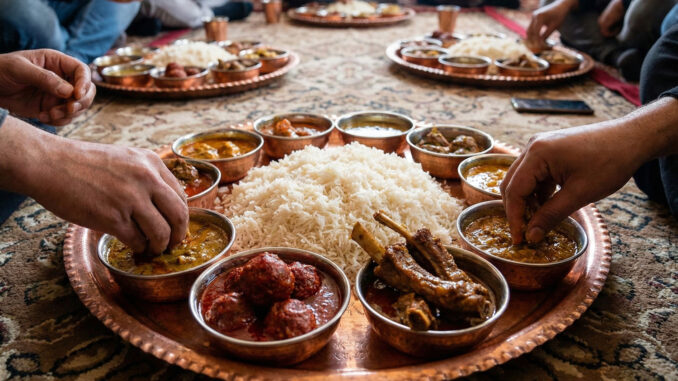
In the world of fine dining, the French have the dégustation and the Japanese have kaiseki. But in the snowy valleys of Kashmir, the ultimate expression of culinary art is the Wazwan.
To call the Wazwan a “meal” is a drastic understatement. It is a ritual, a marathon, and a masterclass in hospitality that has survived since the 15th century. Traditionally consisting of up to 36 distinct courses, it is a feast designed not just to feed, but to overwhelm the senses.
The Architects of the Feast: The Wazas
The Wazwan is not cooked by standard chefs. It is prepared by a specialized lineage of cooks known as Wazas, led by a master chef called the Vasta Waza. These artisans often travel in teams, setting up temporary open-air kitchens where they cook over wood fires in massive copper cauldrons called Deags.
The preparation is grueling. Meat is pounded for hours with walnut wood mallets until it reaches a silk-like consistency, a texture impossible to replicate with modern food processors. This dedication to tradition is why the Wazwan remains listed in global catalogues of unique culinary heritage.
The Ritual of the Tram
Etiquette is central to the experience. Guests are seated in groups of four—a number symbolizing the equality of those sharing the meal. They eat from a single large copper platter known as the Tram.
Before the food arrives, a portable basin (Tash-t-nari) is passed around for guests to wash their hands. Then, the Tram arrives, heaped with rice and the first wave of dry kebabs and ribs. From this point on, the Wazas will rotate through the room, serving wet curries directly onto the rice.
Defining the Key Courses
While the full banquet can include dozens of items, there are seven “permanent” dishes that define a true Wazwan. If you are ever lucky enough to attend a Kashmiri wedding, these are the heavy hitters you must pace yourself for:
- Tabakh Maaz: Ribs of lamb simmered in turmeric water until tender, then fried in ghee until crisp. It is arguably the world’s finest preparation of lamb ribs.
- Rista: Sponge-like meatballs cooked in a fiery red gravy derived from the cockscomb flower (Mawal).
- Rogan Josh: The most famous export, but here it is made without onions or garlic, relying solely on fennel and dry ginger for its aromatic profile.
- Gushtaba: The “Dish of Kings.” This is a large, velvety meatball cooked in a white yogurt gravy. It is traditionally the final meat dish served, signaling the end of the main course.
Why It Matters Today
In an era of fast casual dining, the Wazwan is a defiant remnant of “Slow Food.” It requires patience to cook and patience to eat. For the modern food traveler, it is a reminder that some flavors cannot be rushed, and that true hospitality is about abundance.
If you are exploring the history of these dishes, the Wikipedia entry on Wazwan offers a detailed breakdown of the minor courses that fill the gaps between the main seven.