
For decades, there was an invisible glass ceiling in the culinary world. Indian food could be “good,” “spicy,” or even “luxury,” but it was rarely granted the industry’s highest honor: three Michelin stars. That changed in 2025.
Tresind Studio in Dubai, helmed by the wunderkind Chef Himanshu Saini, became the first Indian restaurant in history to be awarded the coveted third star. It wasn’t just a win for Dubai; it was a watershed moment for Indian gastronomy globally.
The Studio Experience
Unlike the bustling brasseries of London or Delhi, Tresind Studio is an intimate, 20-seat theater. Saini, a protégé of Manish Mehrotra (Indian Accent), has taken the baton and sprinted with it. The dining experience is less about dinner and more about storytelling.
The current menu, often themed around the geography of India, uses ingredients that never usually see a fine dining tablecloth:
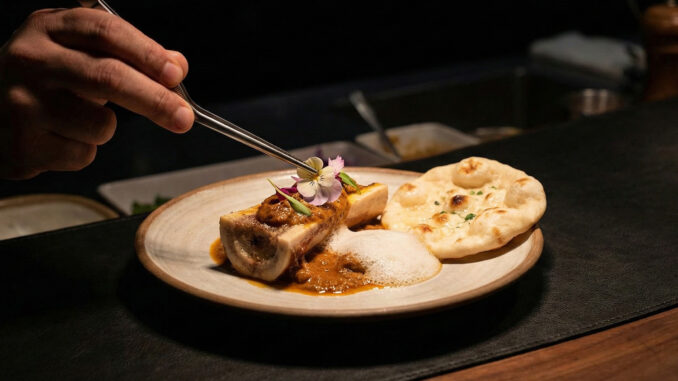
- The “Scarpetta”: A play on the Italian tradition of mopping up sauce, but using a tiny, perfect naan to wipe up a bone marrow curry reduction.
- Khandvi Ice Cream: Taking a savory Gujarati snack and transforming it into a frozen, textural masterpiece.
Why 3 Stars?
According to the Michelin Guide, three stars are reserved for “exceptional cuisine, worth a special journey.” Saini achieved this by stripping away the heaviness associated with Indian food. There are no heavy cream gravies here. Instead, flavors are extracted, distilled, and presented with a microscopic attention to detail that rivals the best Kaiseki counters in Kyoto.
If you can get a reservation (the waitlist is now months long), you aren’t just eating dinner. You are witnessing the moment Indian cuisine finally took its place at the head of the global table.