
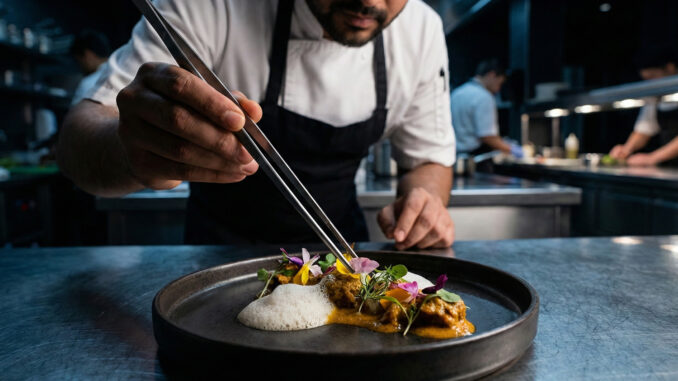
For decades, the pilgrimage for high-end Indian cuisine had a predictable itinerary: London’s Mayfair, New Delhi’s diplomatic enclave, and perhaps a stop in New York. But as we settle into 2026, the culinary axis has shifted decisively East.
Bangkok, a city once defined by its chaotic street food and Royal Thai distinctiveness, has quietly become the global laboratory for progressive Indian gastronomy. It is no longer just about “good curry”—it is about molecular deconstruction, sustainable zero-waste ecosystems, and a level of culinary theatre that has left traditional food capitals playing catch-up.
The “Gaggan Effect” and the New Guard
It is impossible to discuss this seismic shift without acknowledging the catalyst. When Gaggan Anand first famously disrupted the scene, he proved that Indian food could be playful, emotive, and technically rigorous. But what we are seeing in 2026 is the maturity of that rebellion.
The “New Guard” of chefs in Bangkok are not just copying the molecular trends of the past; they are integrating them with Thailand’s incredible access to fresh produce. Unlike London, where ingredients often travel miles to reach the plate, Bangkok chefs are operating in a tropical pantry.
“The advantage Bangkok has is the proximity to ingredients that share DNA with Indian cuisine—coconut, tamarind, chilies—but grown with a freshness you cannot replicate in Europe,” notes culinary critic S. V. Raghavan in a recent editorial.
Sustainability as the New Luxury
The most striking trend in this year’s Michelin Guide Thailand is the rise of the “Green Star.” Indian fine dining in Bangkok has moved beyond opulence and into sustainability.
Restaurants like Haoma have set a terrifyingly high benchmark. By turning an urban plot into a farm-to-table ecosystem—raising their own fish and growing their own greens in the middle of Sukhumvit—they have proven that Indian fine dining can be carbon-neutral without sacrificing flavor. This isn’t just marketing; it is a fundamental shift in how the cuisine is respected on the global stage.
The Fusion Fallacy
Critics often lazy label this movement as “Fusion,” but that misses the point. What is happening in venues like INDDEE or Gaa is not a mash-up of Thai and Indian food. It is an exploration of shared history. By using Thai techniques to interpret ancient Indian recipes, these chefs are creating something that feels both ancient and futuristic.
- The Architecture: Venues are moving away from heavy brocades and sitar music. The new aesthetic is dark, moody, and architectural—spaces that feel more like Berlin nightclubs than traditional restaurants.
- The Wine Programs: The days of “Kingfisher only” are dead. Bangkok’s Indian dining rooms now boast some of Asia’s 50 Best wine lists, focusing on biodynamic wines that can stand up to complex spice profiles.
The Reservation Wars: How to Book
This explosion of quality has created a fierce culture of exclusivity. Because many of these venues operate as intimate “Chefs Tables” with limited seating, tables are often booked out months in advance, especially during the high season (November to March).
If you are planning a culinary trip to Thailand this year, you cannot rely on outdated TripAdvisor lists or walk-in luck. You need to know which chefs are currently at the pass and which tasting menus are worth the splurge.
For a curated breakdown of the current heavy hitters, we recommend reading the 2026 Guide to Bangkok’s Best Indian Fine Dining on BKK Scene. It covers the essential stops, from the rooftop institutions to the new sustainable pioneers, and offers advice on securing those impossible reservations.
Final Verdict
London will always have history. But if you want to see the future of Indian cuisine—where it is going, not where it has been—you need to book a flight to Bangkok.