
London has no shortage of high-end Indian restaurants. From the historic Veeraswamy to the modern glitz of Benares, the capital is saturated with talent. Yet, one name consistently dominates the conversation, the awards, and the “impossible reservation” lists: Gymkhana.
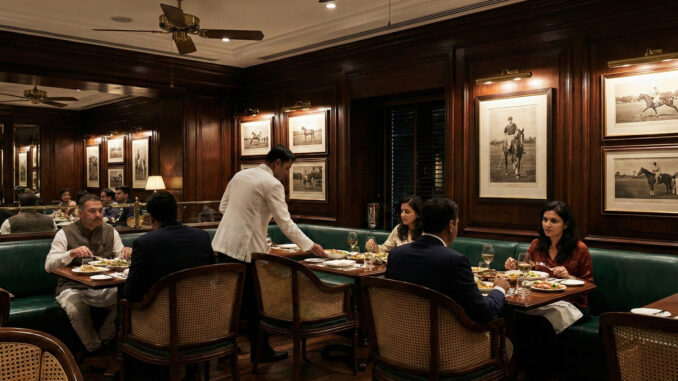
Located in Mayfair, Gymkhana is not just a restaurant; it is a time capsule. Modeled after the elite colonial polo clubs of 20th-century India, it delivers an atmosphere of dark wood, rattan chairs, and ceiling fans that feels distinctively “old money.” But it is the food that recently earned it a historic second Michelin star.
The Game Meat Revolution
Before Gymkhana arrived, Indian fine dining in London was largely defined by French presentation—tiny portions on large white plates. Gymkhana went the other way. They embraced the rustic, bold flavors of the shikar (hunt).
The menu is famous for championing game meat, a nod to the hunting expeditions of the Raj.
- Wild Muntjac Biryani: Using deer meat instead of lamb creates a gamier, richer profile that pairs perfectly with the aromatic basmati.
- Kid Goat Methi Keema: Served with soft buttered pao buns, this is a refined take on Mumbai street food, but with a depth of flavor that only slow-cooked goat can provide.
The “Club” Aesthetic
Part of the allure is the layout. The ground floor is bustling and social, reminiscent of a high-end brasserie. The basement, however, is the vault—a dimly lit, intimate space designed for long lunches that turn into late dinners. It is this club-like atmosphere that aligns perfectly with the “private member” vibe that modern diners crave.
Is It Still Worth the Hype?
Critics have often asked if Gymkhana can maintain its crown as new contenders like BiBi and Colonel Saab rise up. The consensus from major publications like Time Out is a resounding yes. While others chase trends, Gymkhana has mastered consistency. The Tandoori Masala Lamb Chops you order today are just as perfectly charred as they were five years ago.
If you are in London and can manage to secure a table (usually released 2-3 months in advance), it remains the gold standard for what a modern Indian “club” should feel like.