
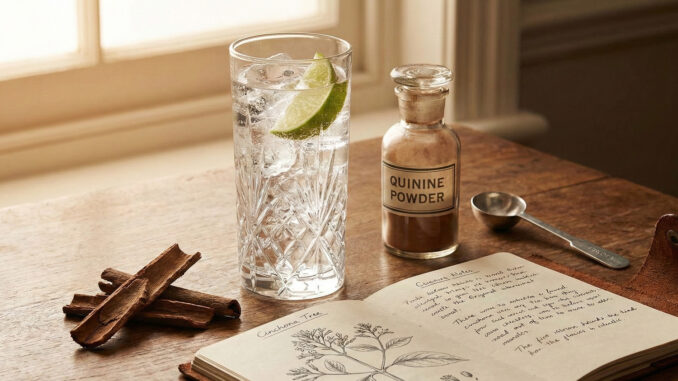
Order a Gin & Tonic in any bar from New York to Tokyo, and you will be served a refreshing highball with a wedge of lime. It is the definition of leisure. But for the soldiers of the British East India Company, it was not a cocktail. It was a prescription.
The G&T is arguably the only classic cocktail in history that was invented solely for survival. Its roots lie not in the speakeasies of the Jazz Age, but in the mosquito-infested jungles of 19th-century India.
The Bitter Cure: Quinine
The story begins with malaria. To combat the deadly disease, British officers were required to take daily doses of quinine, a powder derived from the bark of the South American cinchona tree. Quinine is incredibly effective, but it has one major flaw: it tastes horrifically bitter.
As noted by historians at McGill University, soldiers began mixing the powder with soda water and sugar to make it palatable—creating the world’s first “tonic water.” But even the sugar wasn’t enough to mask the taste.
The Officer’s Ration
The solution was found in the officer’s daily ration of alcohol. By adding their gin allowance and a squeeze of lime (which helped prevent scurvy) to the quinine mixture, the medicine became a drinkable, even enjoyable, evening ritual.
This “medicinal highball” became so vital to the survival of the Raj that Winston Churchill famously declared, “The gin and tonic has saved more Englishmen’s lives, and minds, than all the doctors in the Empire.”
The Modern Serve
Today, the quinine in tonic water is minimal—just enough for flavor, not enough to cure malaria. However, the structure of the drink remains unchanged. To drink it like a colonial officer, you need a heavy hand with the citrus and a juniper-forward London Dry Gin.
According to Difford’s Guide, the key to a perfect serve is not just the ratio (1:3 is standard), but the temperature. The ice must be plentiful and the tonic chilled, or the carbonation—the vehicle that delivers the botanical aroma—will die before it hits your tongue.